Last updated: July 24, 2026
How to read this page. We have not purchased, downloaded, or built this product. Nothing here is a hands-on test. What follows is a summary of what the vendor states publicly, what the underlying physics actually supports, and where the two disagree. The link on this page is an affiliate link — we earn a commission if you buy through it, which is exactly why we would rather tell you the unflattering parts up front.
Energy Revolution System is a $39 digital guide sold through ClickBank. It walks you through building a small electromagnetic device based on a real Nikola Tesla patent. The product is legitimate in the narrow sense that you receive the files you paid for. The marketing around it is a different matter, and that is where most buyer disappointment comes from.
What you actually receive
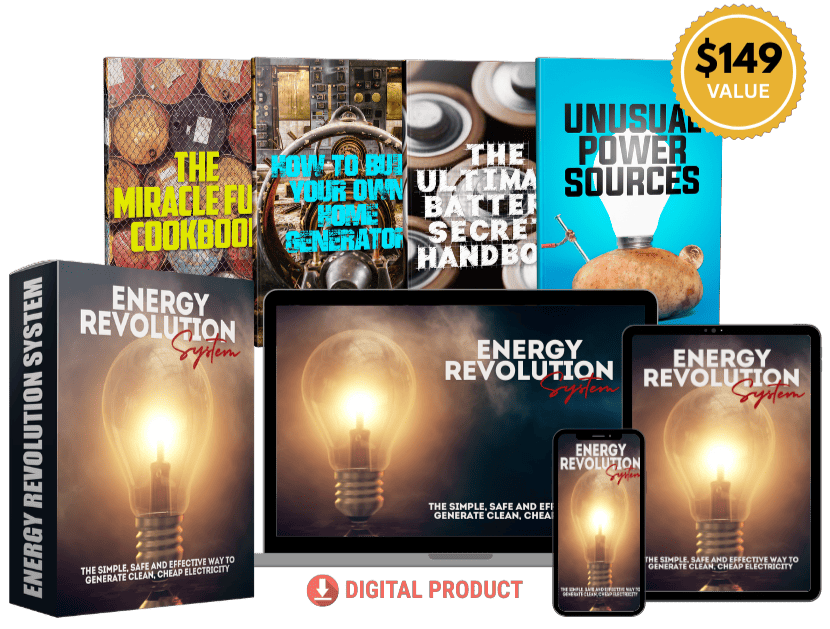
This is a download, not a kit. No components, no pre-wound coil, no hardware of any kind ships to you. You get instructional material and a parts list, then you buy the materials and do the work. The advertised package is:
- Main Energy Revolution System guide (PDF and video)
- Bonus: The Miracle Fuel Cookbook
- Bonus: How To Build Your Own Home Generator
- Bonus: The Ultimate Battery Secrets Handbook
- Bonus: Unusual Power Sources
The $39 price covers the information only. Budget separately for magnet wire, a core, basic hardware, and a multimeter if you do not already own one. Several independent write-ups put the realistic all-in build cost well above the guide price, and the coil winding itself is the fiddly part — roughly 200 turns that need consistent spacing.
The technology is real. The claims about it are not.
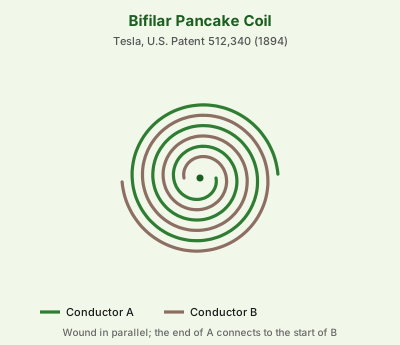
The device is built around Tesla's bifilar pancake coil, covered byU.S. Patent 512,340, granted in January 1894. That patent is genuine and you can read it for free. Tesla's actual stated purpose was to raise the potential difference between adjacent turns so the coil's own distributed capacitance would offset its self-inductance, cutting losses at high frequencies.
That is a real and useful engineering idea. What it is not is a power source. A coil is a passive component. It stores and transfers energy that something else supplies; it cannot produce a net surplus. The sales page language about a device that generates electricity on demand, wipes out power bills, or delivers unlimited free energy describes overunity operation, which would violate conservation of energy. No such device has ever been demonstrated under controlled conditions, and Tesla's 1894 patent does not claim one.
So the honest framing is this: you are buying instructions for a small science-project-grade build that can light an LED or trickle-charge something, presented as if it were a suppressed invention that will disconnect your house from the grid.
What the vendor's own fine print says
You do not have to take our word for the gap between pitch and product. The disclaimers at the bottom of the sales page do most of the work:
- On the product: "The product is an experiment, it was not technically assessed and has not been individually producted nor small-scale produced or mass-produced."
- On the sales presentation: "The story and presentation are created strictly for promotional purposes only."
- On the author: the page states plainly that "Michael Garnett" is a pen name. There is no verifiable engineer, biography, or credential behind the persona telling the Tesla story.
- On legality: "Some home alteration alternatives may be illegal in your town, city, state, province or country."
- On the retailer: ClickBank processes the payment, and its standard notice states that this role "does not constitute an endorsement, approval or review of these products."
The page also advertises a star rating drawn from "31,700+ reviews." We could not locate that review corpus anywhere independently verifiable, and we would treat the figure as marketing until someone can point to the source.
Safety, and why it is not a footnote here
Winding a coil badly is not merely ineffective. Inconsistent spacing can create localised heating in the winding, which is a genuine fire risk if the thing is left running unattended. Anything you connect to household wiring brings in electrical code, permits, and shock hazard. If you build this, keep it isolated on the bench, treat it as an experiment, and bring in a licensed electrician before it goes anywhere near your home circuits.
Refunds and buying safely
Purchases through ClickBank carry the platform's standard 60-day money-back guarantee, and by most accounts it is honoured. Refund problems tend to trace back to copycat sites selling counterfeit or empty copies outside ClickBank, so if you do buy, buy through the official ClickBank checkout and keep your receipt.
Our take
If you are a curious tinkerer who wants a cheap weekend project and a tour through some genuinely interesting Tesla-era coil theory, $39 with a 60-day refund window is a low-stakes bet. Go in expecting a hobby build.
If you are here because your electricity bill hurts and the video suggested this will fix it, this is not the product for you, and we would rather lose the commission than pretend otherwise. Your money goes further on insulation, sealing air leaks, and efficiency upgrades. Our guide oncutting home energy bills covers those, andDIY solar basics is the better starting point if you want a system that measurably offsets real household loads.
Affiliate link. We may earn a commission at no extra cost to you. Read the sections above before deciding.