Last updated: July 24, 2026
How to read this page. We have not purchased this course or built a system from it. Nothing here is a hands-on test of the videos. What follows checks the public sales claims against ordinary solar and electrical practice. The link on this page is an affiliate link — we may earn a commission if you buy — which is why the unflattering parts stay in.
DIY Home Energy is a $47 one-time digital course sold through ClickBank at diyhomeenergy.com. It teaches you how to source solar (and wind) components and assemble systems yourself instead of buying a turnkey install. That premise is legitimate. Some of the marketing numbers, and one interconnection claim in particular, are not.
What you actually receive
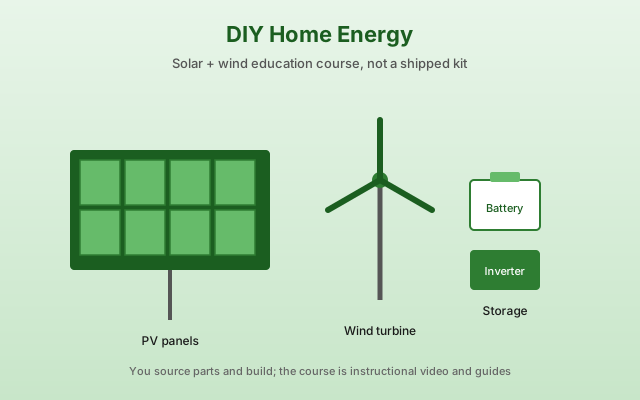
No hardware ships. After checkout you get digital access. Per the sales page, the package includes:
- Solar panel video course (~3 hours) with companion guides
- DIY wind turbine program
- Solar, wind, and battery bank sizing calculator
- Advanced power savings / efficiency guide
- 60-day money-back guarantee via ClickBank
Creators are named as Jeff Davis and Tim Baker, with public support at support@diyhomeenergy.com. Unlike many offers in this niche, the site we reviewed does not hide behind a pen-name disclaimer or the “experiment, not technically assessed” boilerplate common on perpetual-motion style funnels.
Budget separately for parts. A portable camping setup and a cabin-scale off-grid bank are different orders of magnitude. The course’s sizing calculator is meant to help with that; the $47 price is only the instruction.
What is actually true here
Residential solar works by converting sunlight into DC electricity at the panels, regulating charge into a battery bank (or feeding an inverter), and delivering AC to loads. Wind turbines convert kinetic energy in moving air the same way a generator does. None of that is exotic.
The cost claim with a real basis is this: a large share of what retail solar companies charge is labor, customer acquisition, and overhead. Buying panels, a charge controller, inverter, racking, and batteries from distributors and assembling them yourself can reduce what you pay for theequipment path compared with a full-service quote — provided you have the time, tools, and willingness to do the work correctly.
Teaching system sizing, portable vs backup vs off-grid configurations, and basic efficiency habits (cutting phantom loads, using less before you generate more) is ordinary, useful DIY education. That is the product’s honest core.
Where the marketing overreaches
The sales page leads with figures like “lowers the cost of getting solar panels by up to 85%” and “slash your power bill by up to 75% in less than 30 days.” Treat those as best-case advertising, not expectations.
- Cost vs retail: Self-sourcing can save money versus a turnkey installer. “Up to 85%” depends on what you compare against, your system size, and whether you value your own labor at zero.
- Bill reduction: How much a system cuts your bill depends on panel watts, sun hours at your location, battery capacity, and how much of your load you actually offset. A small portable rig will not slash a whole-house bill by three-quarters in a month.
- Crossed-out “value” prices: Bundling bonuses at arbitrary retail figures ($237, $99, etc.) is standard ClickBank packaging. Judge the offer by what you pay and what files you get.
The claim you should not follow blindly
The sales page describes a “Plug and Play” hybrid grid-tied setup and says approval from your energy company is not needed — just plug into an electrical outlet. In most of the United States, backfeeding a household circuit through a wall receptacle without utility interconnection approval and proper anti-islanding protection violates electrical code and utility rules, can void insurance, and creates fire and shock risk for you and for line workers. A few jurisdictions have begun allowing small certified plug-in “balcony” solar under specific rules; that is not a blanket green light. Check your utility and local code — or hire a licensed electrician — before connecting anything to house wiring.
Off-grid and battery-backed portable systems that stay isolated from the utility are a different matter. Those are the configurations where DIY courses like this are usually most appropriate for beginners.
Safety and expectations
- DC solar strings, battery banks, and inverters can deliver dangerous current. Follow manufacturer ratings; do not improvise breakers and wire gauges.
- Homemade or unlisted assemblies may not meet insurance or inspector requirements if you later want a permitted grid-tied system.
- Wind: small DIY turbines under ~$190 can add supplemental charging in windy sites; they will not replace a properly sized solar array for most homes, and tower/mounting safety matters.
Our take
If you want structured video walkthroughs on assembling conventional solar and a small wind add-on from bought parts, and you will ignore the percentage headlines and the outlet-plug grid-tie pitch, $47 with a 60-day refund window is a low-stakes way to evaluate the instruction. The underlying technologies — PV and wind — are real.
If you were sold on “75% off the bill in 30 days” or “plug into the wall, no utility approval,” this page is your stop sign. Start with load reduction and a clear watt-hour budget instead — see our guides oncutting home energy bills,DIY solar basics, andbackup power options.
Affiliate link. We may earn a commission at no extra cost to you. Read the sections above before deciding.